
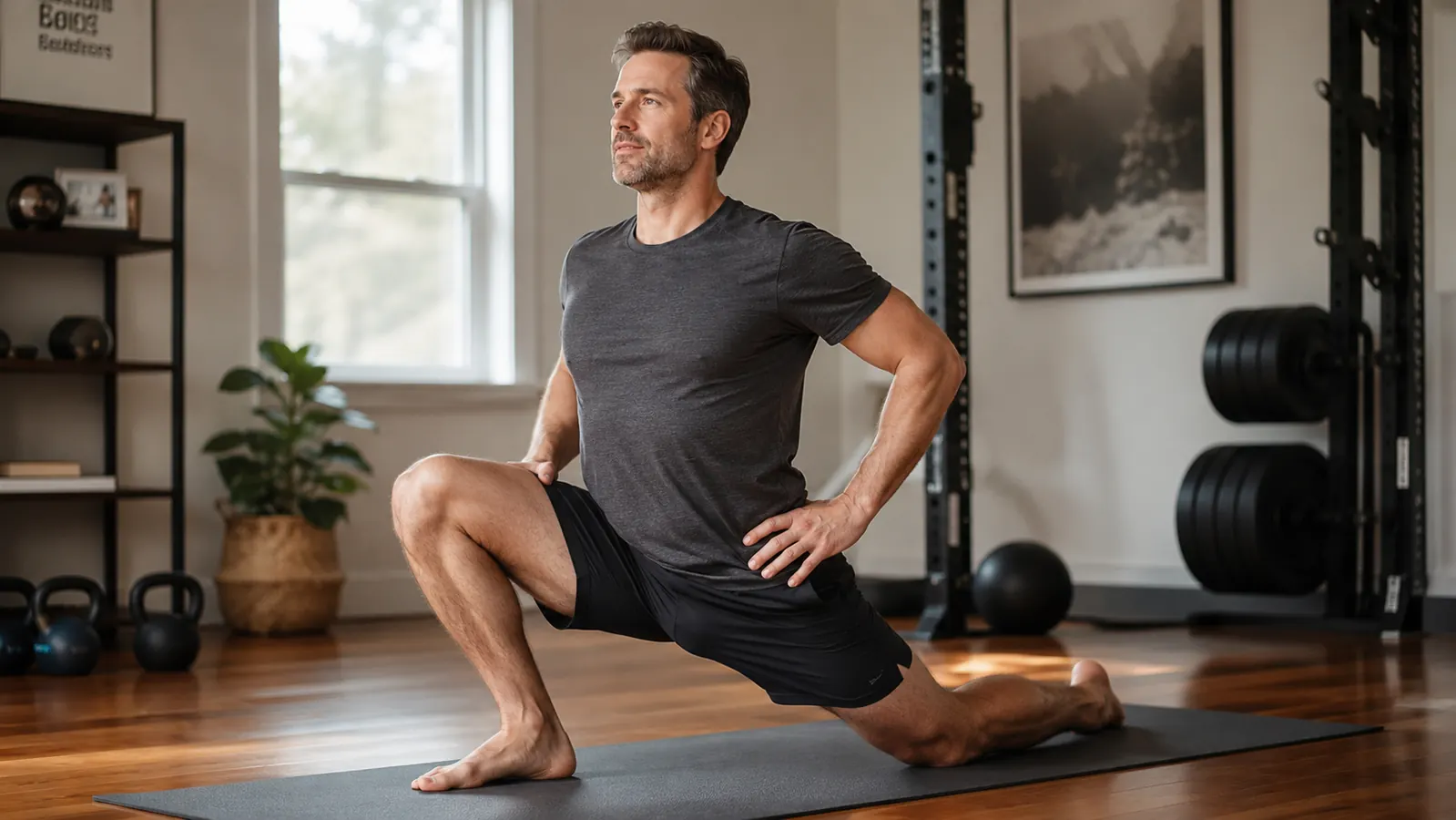
For about two years, every time I set up for a deadlift, my right hip would pinch. Not a sharp tear, not a pop. Just a deep, grinding impingement right where my femur meets the socket, like something in there was being asked to move through a door that was half an inch too narrow. I pulled 365 at 42 years old. I knew how to hinge. The problem was not my form.
I tried everything in the right order. I stretched my hip flexors. I did pigeon pose until my cat got bored watching me. I backed off the weight, worked on my banded hip distraction, bought a mobility book written by a guy with more credentials than sense. Nothing touched it. The pinch was still there at 225 lbs, the same as it was at 315. My training partner, who had played college football and had the joint damage to prove it, watched me set up one afternoon and said, 'You sitting at a desk all day?' I was. Eight hours a day, five days a week. He tossed me a lacrosse ball.
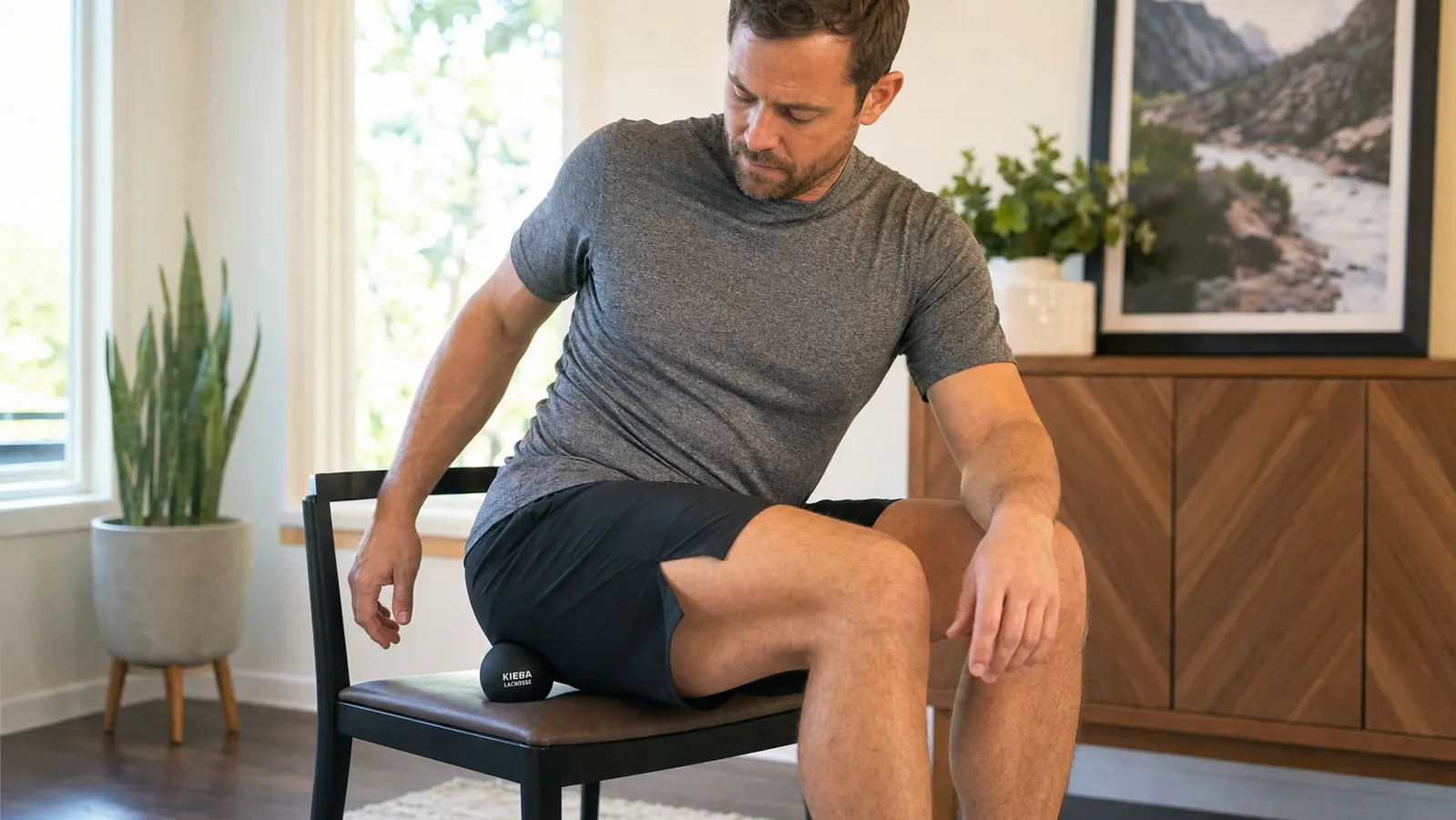
I did not think much of it. I had seen those things rolling around on gym floors for years. They looked like something you absentmindedly kicked toward the squat rack. He had me sit on the floor, put the ball under my right glute just lateral to the sitting bone, and find the spot that made me want to get up and leave the room. I found it in about four seconds. A knot the size of a marble, sitting deep in the piriformis, completely untouched by any of the stretching I had been doing for two years. Stretching does not reach adhesions. Pressure does.
I sat on that ball for ninety seconds. I breathed. I rotated my leg slowly to change the angle. By the time I stood up, something had shifted. Not cured, not fixed, but noticeably different. I pulled 275 that day and felt zero pinch on the right side. I drove straight to Amazon on my phone and ordered a set of Kieba lacrosse massage balls.
Stretching does not reach adhesions. Pressure does. Ninety seconds on that ball shifted something two years of pigeon pose never touched.
If your hips are locking up under load, this is the tool that actually reaches the problem.
The Kieba set comes with two firm balls at the same density as a real lacrosse ball. They do not go soft after a few weeks. Budget-priced on Amazon, ships fast, and you will use them more than anything else in your recovery kit.
Amazon Check Today's Price on Amazon →The Kieba balls arrived in two days. They are firm, consistent, and about the right diameter to wedge into tight spots without slipping. I set a protocol that I have now held for going on eight months: three minutes on each hip before every squat or deadlift session. I sit on the floor, put the ball under the glute-piriformis junction, and work slowly through any spot that catches. I also use one against the wall for the TFL, that band of tissue running along the outside of the hip that gets strangled from sitting. Three minutes a side, every session, no exceptions.

My deadlift PR went from 365 to 405 in the six months after I started. I am not saying the ball added 40 lbs to my pull. I am saying the hip impingement was capping my effort because I was subconsciously protecting the joint, not driving through it. Once the tissue released, I could actually pull the way I trained to pull.
Two things surprised me. First, how much the piriformis affects everything downstream. When that muscle stays locked, it alters hip rotation, shifts loading onto the lower back, and throws off the whole pattern. Lifters chase lower back pain for months without realizing the actual source is six inches higher and two inches to the side. Second, how consistent the Kieba balls are. I have used cheaper lacrosse balls that went soft or developed flat spots. These have held their shape and firmness after eight months of daily use, which is exactly what you need when the whole point is sustained, targeted pressure.
My wife started using them for her plantar fasciitis. My buddy borrowed one for his pec minor. The second ball in the set, which I initially thought was redundant, turned out to be useful for placing both balls side by side along the thoracic spine and lying back on them for a thoracic extension release. That is a bonus I did not expect.
What I'd Tell You If We Were Sitting at My Kitchen Table
If you are dealing with chronic hip tightness that does not respond to stretching, you probably have a tissue adhesion problem, not a flexibility problem. Those are different things that require different solutions. A lacrosse ball costs less than a single physical therapy copay and does not require a referral. I am not telling you to skip the PT if your situation warrants it. I am telling you that a lot of hip issues that feel structural are actually just deep tissue that has never had any direct pressure applied to it.
Start with the glute-piriformis junction. Sit on the floor, ball under your right cheek, slightly lateral to the center. Find the spot that makes you uncomfortable. Stay there. Breathe. Let the tissue respond. Do it before you lift, not after, and give it at least three sessions before you judge it. If you want the full breakdown of where to put the ball for different areas, I covered it in detail in the 10 trigger point spots guide. And if you want to see how the Kieba balls hold up over a full year of daily use, my long-term review covers durability, firmness, and who they are for: Kieba lacrosse massage ball review.
The Kieba set is inexpensive. That is not a typo. Two balls, consistent firmness, and they will outlast most of the expensive recovery gadgets you have probably considered before scrolling to this page. I have used a lot of tools in this space. This one earns its spot in the gym bag every single session.
Two balls. Budget-friendly. The most consistent myofascial release tool I have used in two years of chasing hip pain.
The Kieba set is rated 4.7 stars across nearly 25,000 reviews. Firm, durable, and the right size for glutes, piriformis, TFL, pecs, and plantar fascia. If your hips are locking up under load, start here.
Amazon Check Today's Price on Amazon →