
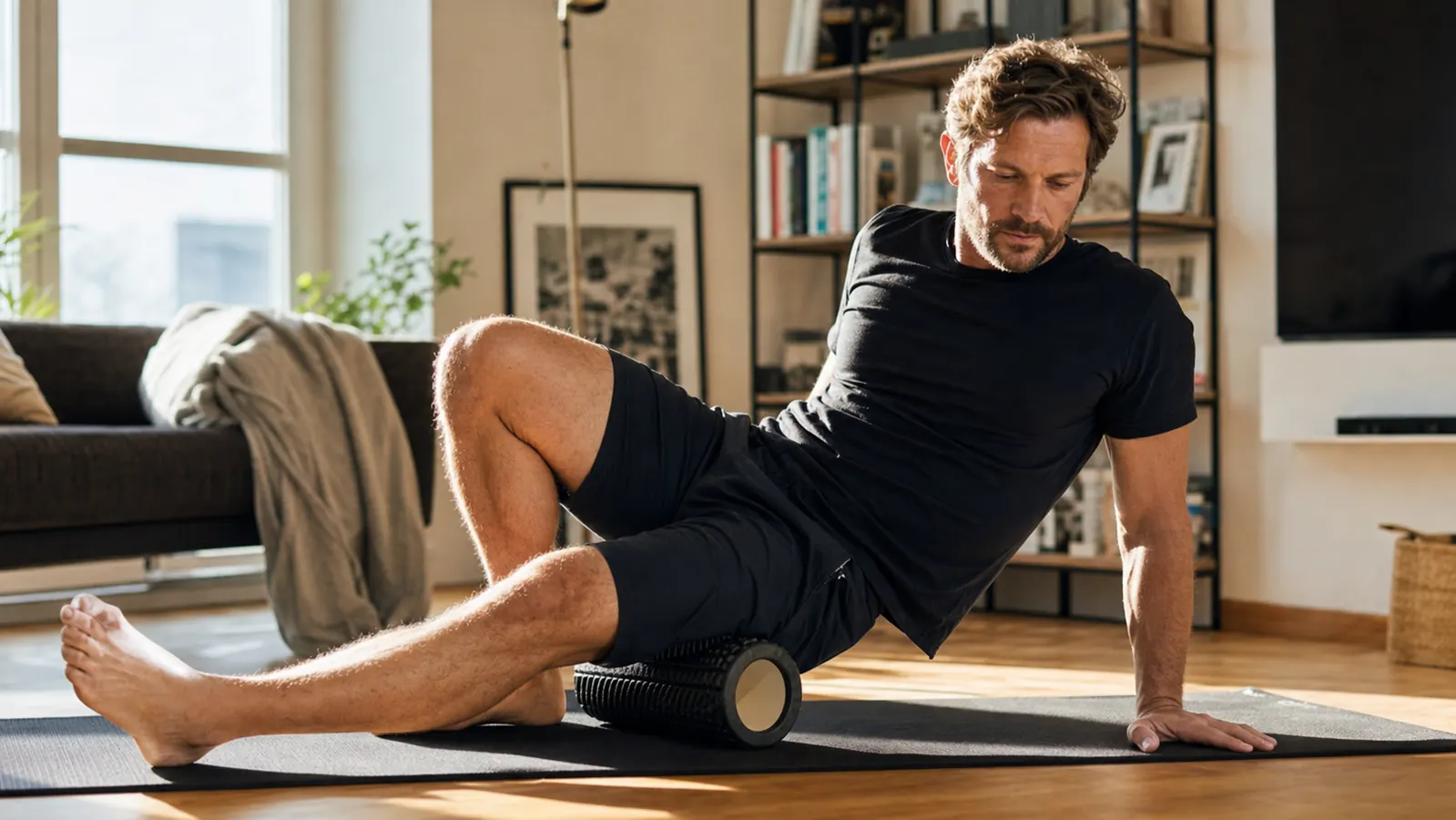
For about two years, every morning started the same way. I would sit up in bed, swing my legs over the side, stand up, and wince. That first step from the bedroom to the bathroom was a project. My knees felt like they were wrapped in wet concrete, my quads were stiff from whatever I had done two or three days before, and my IT bands were so tight they hummed. I was 43. I told myself this was just what happened when you trained through your forties, ran 25 miles a week, and also tried to deadlift twice your bodyweight in a garage with a cracked concrete floor.
I was wrong about the age part. The stiffness was not inevitable. It was a problem I was creating and then doing nothing to solve.
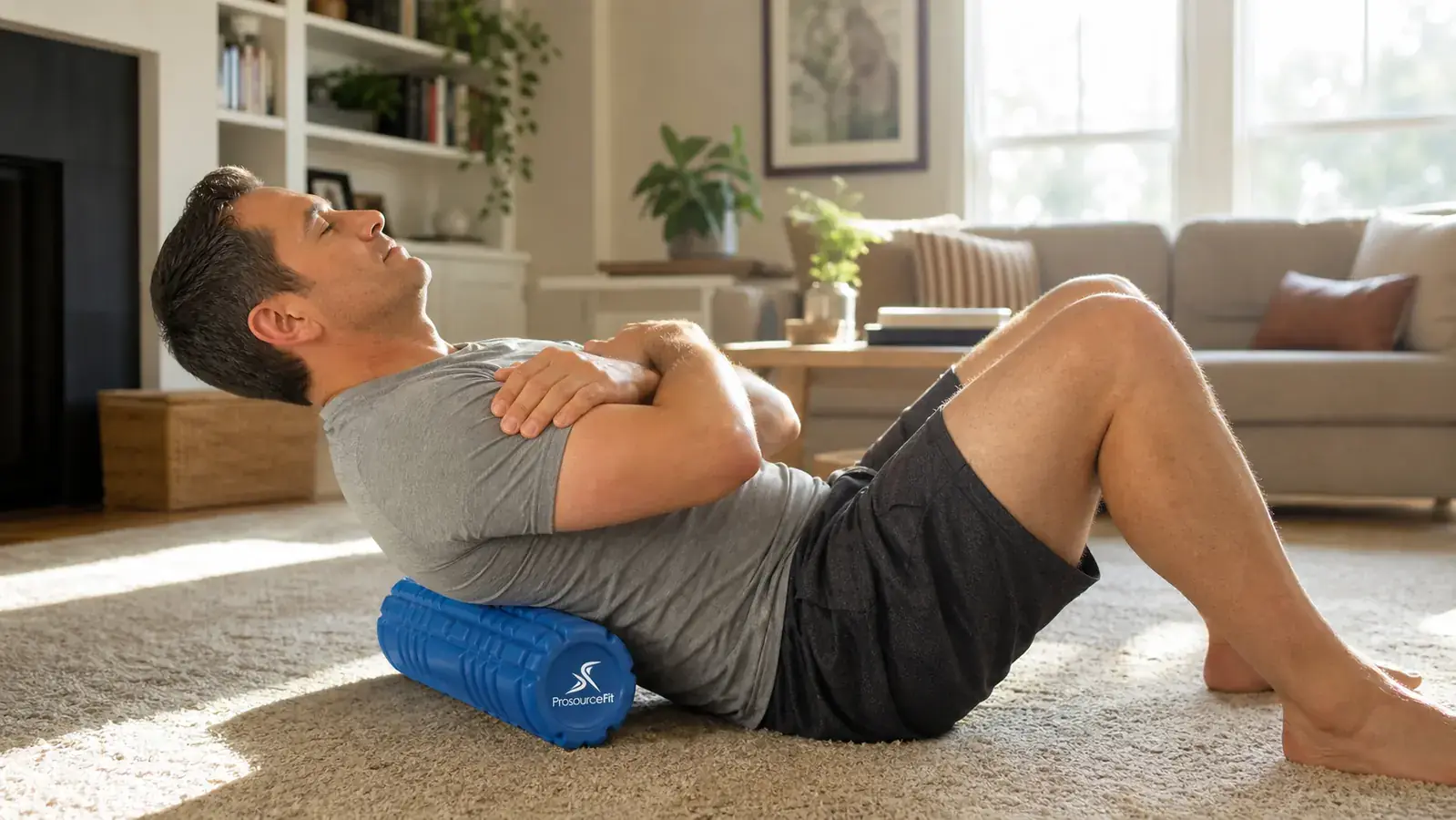
I had a foam roller sitting in the corner of my garage for about a year and a half. I had bought it after a bad IT band flare during a 10-mile trail race, used it three times, and then let it become a place to rest my gym bag. It was a ProsourceFit high-density roller, the kind with the smooth surface and a core that does not compress under your bodyweight. I had spent maybe twelve dollars on it. It had done nothing for me because I had done nothing with it.
The shift happened on a Tuesday in February. I had a trail run scheduled for 7 AM and I woke up at 6 AM feeling like I had been in a car accident. Legs completely locked. I almost texted my running partner to cancel. Instead, I grabbed the roller from the corner, dropped it on the garage floor, set a 10-minute timer on my phone, and just started working through the areas I knew were always tight: quads, IT bands, calves, and a slow pass along the thoracic spine for good measure. I did not have a plan. I just rolled.
I finished the run feeling better than I had in months. Not because I was suddenly some foam-rolling expert. Because I had spent 10 minutes doing something instead of nothing.
The run went well. Better than expected. I was loose by mile two in a way that usually took me four or five miles to get to. My knees did not complain on the downhills, which was the part of every run that had been grinding me down for two years. I finished and thought: that was probably a coincidence.
So I did it again the next morning. Then the morning after that. By the end of the first week, the concrete feeling when I stood up was noticeably lighter. By week three, I was waking up and walking to the bathroom without thinking about my knees at all. That had not happened in a long time.
Here is what I figured out about the ProsourceFit roller specifically: the high-density core matters more than I expected. I had used soft, cheap foam rollers before at a commercial gym, and they felt good but did basically nothing for tight fascia. They just sank under your weight. This one does not. It holds its shape and lets you control the pressure by how much bodyweight you put into it. On the quads I can load it hard. On the IT band, which is more sensitive, I ease off. That level of control made it possible to actually stay on a spot that needed work instead of bailing out because it felt like I was lying on a pool noodle.
I will also say this: the 12-inch length felt limiting at first compared to the longer 36-inch rollers I had seen at the gym. Turns out it is not a limitation at all for floor work. You reposition constantly anyway, moving a few inches at a time to find the tight spots. A shorter, firmer roller is easier to move precisely. I use it for quads, hamstrings, calves, IT bands, glutes, and upper back. The only thing I do not do with it is full-length thoracic spine extension, which needs a longer roller. For everything else, this is the one I reach for every morning.
What I Would Tell You If We Were Sitting at My Kitchen Table
If you asked me what changed my training in the last six months, I would not tell you it was a new program or a supplement or a new pair of shoes. It was 10 minutes of foam rolling before my first cup of coffee, every single morning. Not sometimes. Every morning.

The tool I use is the ProsourceFit high-density foam roller. It runs about twelve dollars on Amazon, it has held its shape through six months of daily use without any soft spots or deformation, and it is small enough to live on my garage floor rather than in a closet I never open. I have no reason to recommend anything else at this price point. I have tried rollers that cost four and five times more and they did not do better work on my legs. They just cost more.
If your mornings feel like mine used to, tight knees, concrete quads, the sense that your body is arguing with you before the day even starts, this is where I would begin. Not a new training split. Not a recovery gadget with a charging cable. Ten minutes and twelve dollars. See what a month of consistency does. I think you will be surprised.
Your knees are not failing you. They are just not being taken care of before you ask them to work.
The ProsourceFit High Density Foam Roller is the exact tool in this story. Firm enough to actually work on tight fascia, small enough to live on your floor, and built to last through daily use without going soft.
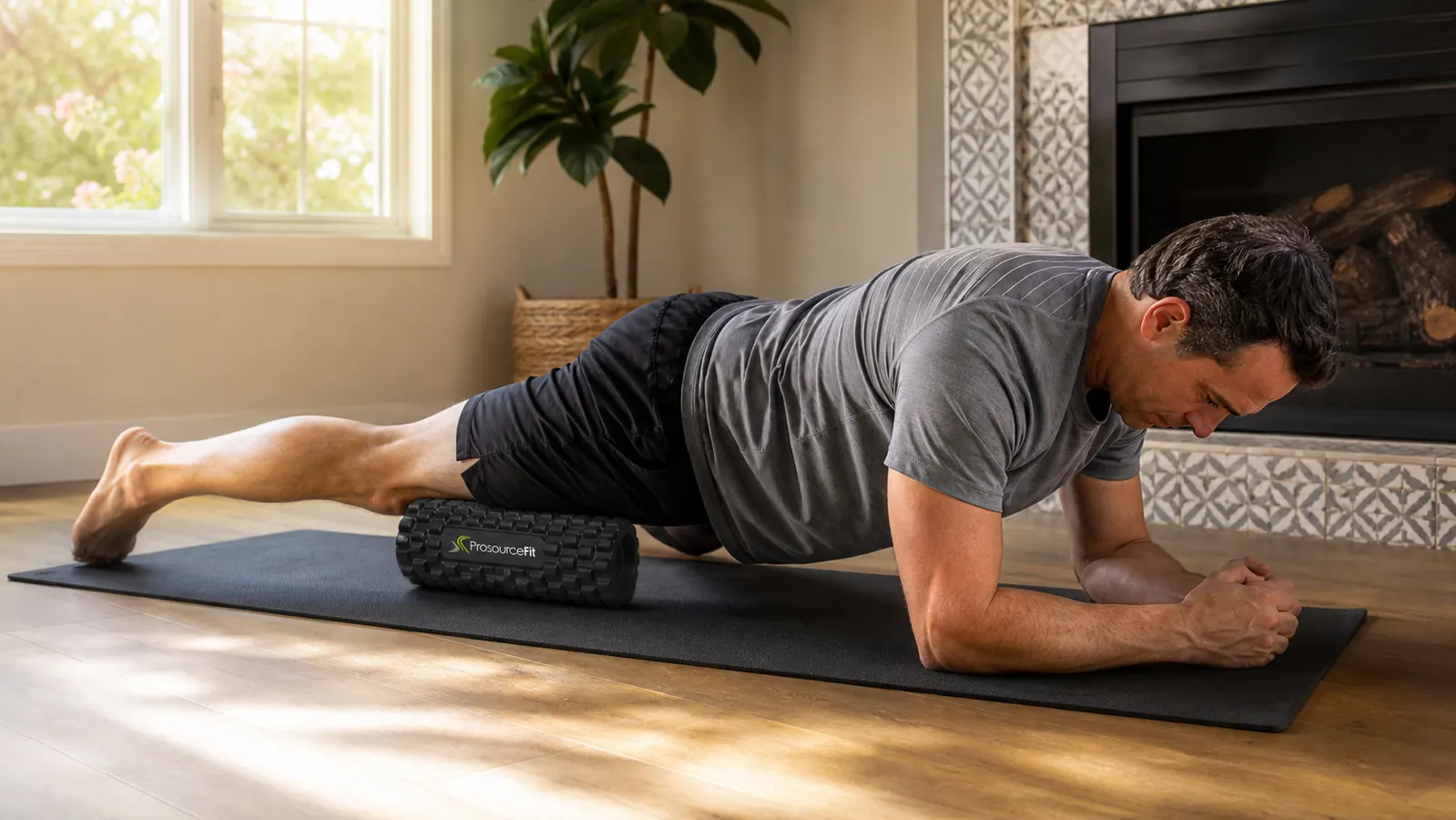
Amazon Check Today's Price on Amazon →A few things worth knowing before you start: spend at least 60 seconds on each area rather than rolling back and forth quickly. Find the tight spot, pause on it, breathe, and let the pressure work. That is what actually releases the fascia rather than just warming the surface. For the IT band, roll the outer thigh from hip to knee in slow passes. For the quads, work one leg at a time and prop up on your forearms so you can control how much weight you sink into the roller. For calves, cross one leg over the other to add pressure. These are not complicated techniques. If you want a more detailed breakdown, I wrote a full guide on foam rolling techniques that covers each area in depth.
The only honest caveat I will give you is this: foam rolling is not a treatment for actual injury. If you have knee pain that is sharp, localized, and getting worse, that is a conversation to have with a doctor or physical therapist, not something to foam-roll through. What rolling does well is address the chronic tightness and accumulated tension that builds up from training, sitting, and not doing enough maintenance work. That is the version of stiffness I had, and that is the version it fixed.
Six months ago I was blaming my knees on aging. Turns out they just needed 10 minutes of attention.
The ProsourceFit foam roller is rated 4.6 stars by more than 20,000 buyers and currently costs less than a post-workout protein shake. If you have been putting off adding a mobility habit, this is the lowest-friction place to start.
Amazon Check Today's Price on Amazon →