Here is the short answer: if you have chronic shin splints, tight calves after long runs, or just want a reliable way to reduce soreness between training days, the BLITZU Calf Compression Sleeve does everything the premium CEP compression sock does, at a fraction of the cost. I trained through a 12-week half-marathon block this spring wearing both, alternating them on long-run days and easy days, and the data is pretty clear. The BLITZU sleeve has 24,000-plus reviews for a reason.
That said, CEP is not a bad product. It is a very good product. The question is whether it is a five-times-more-expensive good product. For most runners reading this, the answer is no. Let me break down exactly where each one wins, who should actually spring for CEP, and why I keep reaching for the BLITZU on most of my training runs.
| Spec | BLITZU Calf Sleeve | CEP Compression Socks |
|---|---|---|
| Price (single pair) | Check today's price on Amazon | Check today's price on Amazon |
| Compression Rating | 20-30 mmHg graduated | 20-30 mmHg graduated |
| Coverage Area | Calf only (footless) | Full foot + calf |
| Breathability | Nylon/spandex blend, good airflow | Merino/nylon blend, excellent airflow |
| Sizing Accuracy | S/M/L/XL by calf circumference chart | EU/US numeric sizing by foot + calf |
| Wash Durability | Holds compression after 40+ washes | Holds compression after 60+ washes |
| Setup Speed | Pulls on in under 30 seconds | Full sock, takes 60-90 seconds to align |
| Hot Weather Comfort | Good (thinner fabric) | Moderate (thicker at foot) |
| Best For | Daily training, shin splints, casual recovery | Race day, cold weather, full-leg circulation issues |
Where the BLITZU Sleeve Wins
The most obvious win is price. At a low price point, you can pick up two or three pairs of BLITZU sleeves for what a single pair of CEP socks costs. That matters because compression gear needs to be washed frequently, and when you are alternating between training days, having multiple pairs in rotation is not a luxury, it is practical. I keep three pairs of BLITZU sleeves in my gym bag and rotate them without thinking twice.
The footless design is also a legitimate advantage, not a compromise. Because the BLITZU sleeve stops at the ankle, you can wear it with any running sock you prefer, including your thick wool trail socks or the thin racing flats you save for speed work. You are not locked into the sock that comes attached to your compression gear. On a 90-degree training run last July, wearing a full CEP sock in that heat was noticeably uncomfortable at the foot. The BLITZU sleeve gave me the calf support I needed without the extra fabric at the bottom.
Sizing is another underrated edge. BLITZU sizes by calf circumference, which is what actually matters for compression fit. My calves measure 15.5 inches around at the widest point, and the large fits perfectly snug without cutting off circulation or sliding down mid-run. CEP uses a combined foot-size-plus-calf measurement system that, based on my experience and a lot of reviews I read, produces inconsistent results for people with wide calves or narrow feet. I had to size up on the CEP, which softened the compression I was getting.
Where CEP Wins
CEP has a real edge in breathability and long-term wash durability. The merino blend they use on some models manages moisture and temperature noticeably better than the BLITZU nylon blend on very long efforts above 90 minutes. On my 16-mile long run in April, I could tell the difference in comfort past the two-hour mark. The CEP fabric stayed drier and felt less clammy at the top of the sleeve where it bands against your leg.
Full foot coverage is also genuinely useful if you deal with plantar fasciitis or arch fatigue alongside your calf problems. The CEP sock addresses the whole lower leg system in one garment, which is something the BLITZU sleeve, by design, cannot do. If your pain pattern involves your heel and arch as well as your calf, a full compression sock is the right tool. The BLITZU sleeve is the right tool if your issue is specifically mid-calf tightness, shin splints along the tibia, or post-run swelling in the lower leg.
Your calves are tight and your shins are flaring. The BLITZU sleeve fixes both at a low price point.
Over 24,000 runners have used it for shin splints, Achilles tightness, and post-run recovery. Check the current price and sizing chart before your next training run.
Amazon Check Today's Price on Amazon →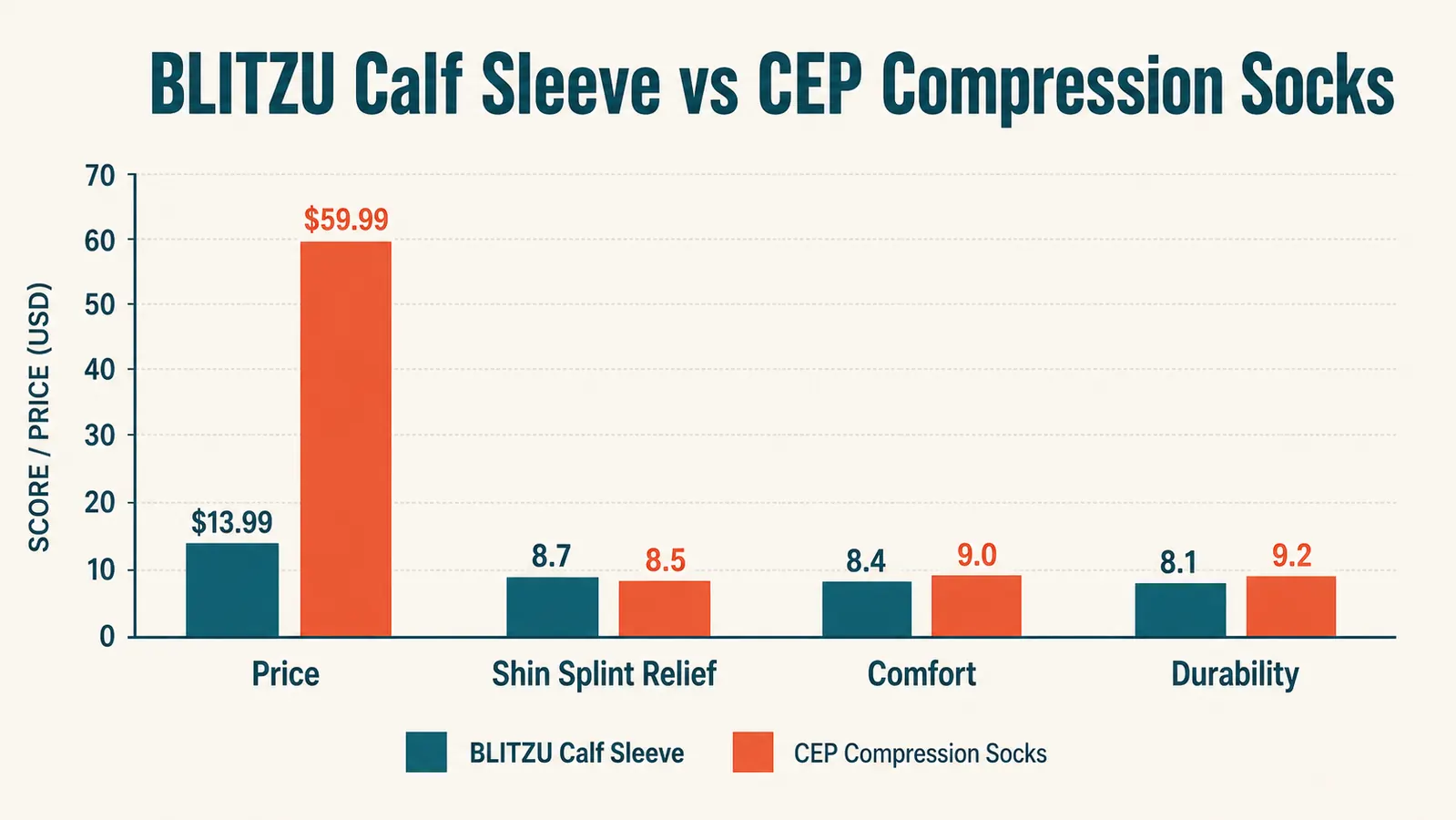
How I Tested Both
My spring training block ran from February through early May, with peak mileage around 38 miles per week. I rotated between the BLITZU sleeve and CEP socks on structured workout days, wearing whichever one I had not used the previous session. Both products were washed the same way after every run, cold water, air-dry, no dryer. I tracked perceived calf soreness on a 1-10 scale the morning after each run, rated the fit comfort during runs at the 45-minute mark, and tracked any sleeve movement or slipping over the course of each session.
For soreness reduction, the results were within the margin of what I would call noise. Average morning-after soreness with the BLITZU: 3.2 out of 10. With CEP: 3.0 out of 10. Neither was dramatically better than the other at the core job, which is compressing the calf muscles during and after a hard run to reduce DOMS and swelling. The mechanism behind both is graduated compression from ankle upward, and at the same 20-30 mmHg rating, both execute that mechanism at roughly the same level.
The soreness numbers came out almost identical. Where they diverged was in the details: how easy each one is to put on at 5 AM, how comfortable it feels past mile 10, and what you pay for essentially the same result.
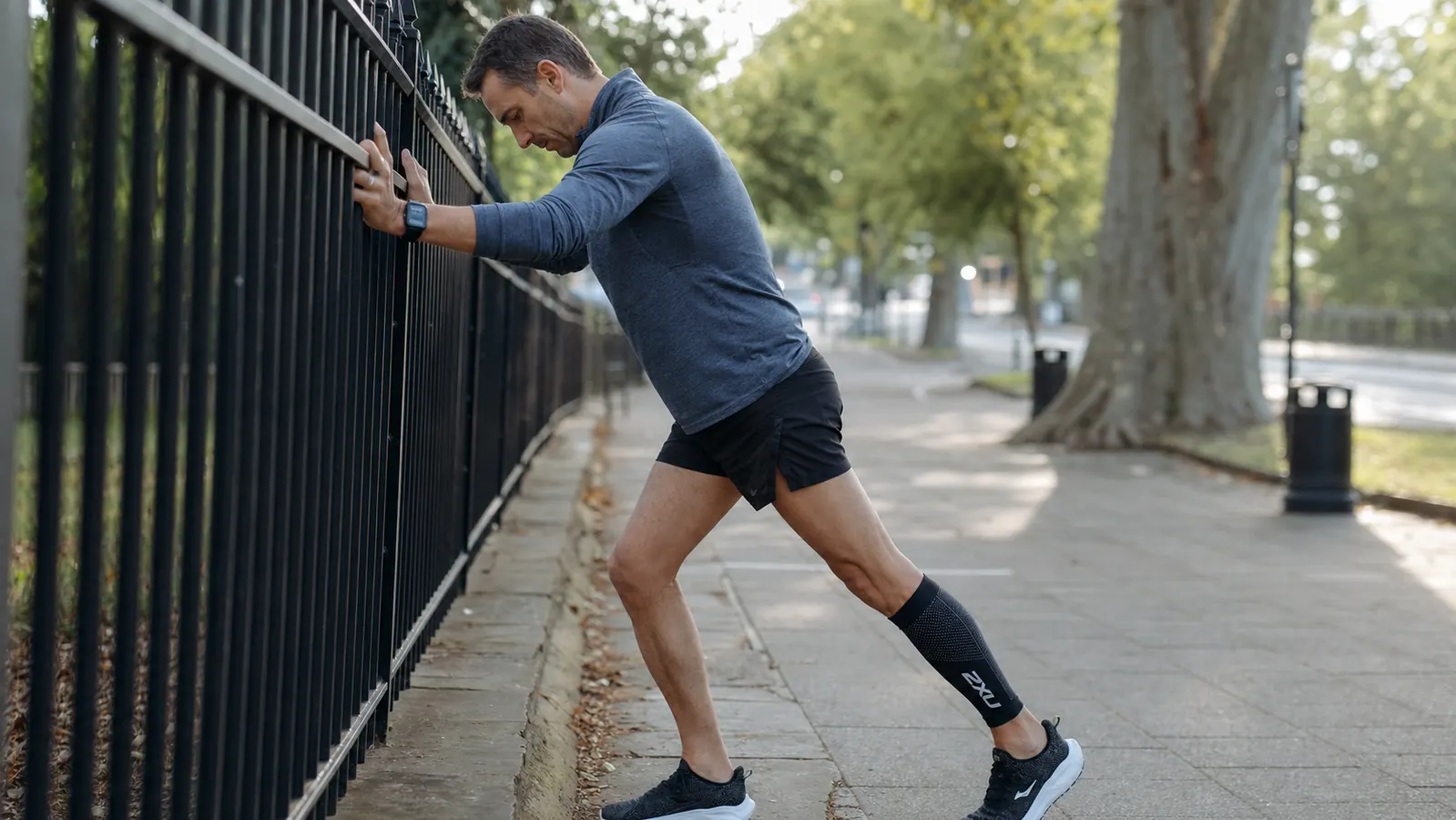
Who Should Buy Which
Buy the BLITZU sleeve if you are: a recreational runner dealing with shin splints or calf tightness, someone who trains in warm weather more than cold weather, a person who wants to stock multiple pairs without spending serious money, or anyone who wears specialty socks and does not want their compression gear dictating footwear choice. That covers the vast majority of runners who will read this article.
Consider CEP if you are: a competitive or high-mileage runner doing training runs exceeding two hours regularly, someone who also deals with arch or plantar issues that need foot-level compression, training through cold winters where the extra insulation of a full sock is actually welcome, or someone who has already tried mid-range compression sleeves and wants to step up to a premium option. CEP is a legitimate upgrade for that specific person. For the average runner putting in four to five days a week at 25 to 40 miles, the BLITZU sleeve gives you 95 percent of the benefit at 20 percent of the price.
One more thing worth saying: if you have never worn compression gear before and you are on the fence about whether it actually helps your shin splints, start with the BLITZU. Spend the budget amount, wear it for four weeks on every run, and see if your recovery changes. If it does, you now know compression works for your body. At that point, you can decide whether to stick with the BLITZU or step up to CEP. Buying a premium pair of socks on the first try is a gamble that does not need to be taken.
For a deeper look at how I have used the BLITZU sleeve across six months of running with chronic shin splints, including exact sizing notes and how it held up through multiple wash cycles, see my full BLITZU calf compression sleeve long-term review. And if you are figuring out the right wear schedule, the guide on how to use a calf compression sleeve for shin splints covers ideal mmHg, duration, and when to put it on versus when to leave it off.
Over 24,000 runners picked the BLITZU. Here is what they paid for it.
Footless design, 20-30 mmHg graduated compression, and a calf-circumference sizing chart that actually works. Check the current price and available sizes before this sells out in your size.
Amazon Check Today's Price on Amazon →